Chocolate has always been one of the strongest flavors in snack bars. But the role of chocolate is changing.
It is no longer only the coating, drizzle, chip, or sweet base that makes a bar feel familiar. Chocolate is becoming a tool for premium positioning, better texture, global flavor exploration, plant-based innovation, portion control, and more mindful indulgence.
FoodNavigator reported that the global chocolate market is worth around $123 billion and continues to grow at a 4.8% CAGR, while recent years have brought cocoa supply shocks and record-high prices in 2025 due to extreme weather, disease, and aging trees in West Africa.1 That makes chocolate one of the most important ingredients to rethink in the next generation of snack bars.
Chocolate Still Starts WIth Familiarity
Classic chocolate flavors are not disappearing. In fact, they remain powerful because they are easy to understand.
Cargill’s ChocoLogic research found that fewer than 3% of consumers report avoiding chocolate, while three in four consumers view chocolate as a way to reward themselves.2 The same research found that 72% of consumers say chocolate lifts their mood and 59% say it boosts their energy.2
This explains why chocolate works so well in snack bars. It can make a functional product feel more enjoyable. A protein bar feels more like a treat when it has a chocolate coating. A fiber bar feels more appealing when it includes dark chocolate chips. A nut bar becomes more indulgent with a thin chocolate base or drizzle.
The classic pairings still matter:
• Chocolate and peanut butter
• Chocolate and caramel
• Chocolate and hazelnut
• Chocolate and coconut
• Chocolate and almond
• Chocolate and sea salt
• Chocolate and berry
Cargill found that caramel and peanut butter were the leading chocolate flavor pairings, with 60% of consumers selecting them in their top three.2
For retailers and brands, this means classic chocolate bars should not be ignored. They are often the foundation of the range. The opportunity is to improve them with better texture, clearer claims, better ingredients, and more specific positioning.
Dark Chocolate Has Moved Into Better-For-You snacking
Dark chocolate has become especially important because it sits between indulgence and health perception. Cargill reported that nearly seven in ten consumers associate chocolate with health benefits, and that 52% of dark chocolate consumers choose it because they believe it is healthier.2 Cargill’s 2024 APAC chocolate innovation insights also found that 50% of APAC consumers prefer dark chocolate for its less sweet profile and perceive darker chocolate as healthier and more premium.3 Dark chocolate also works well when a bar needs balance. It can reduce the perception of excessive sweetness in bars with dates, dried fruit, caramel, or sweet protein fillings.
Chocolate Is Becoming More Textural
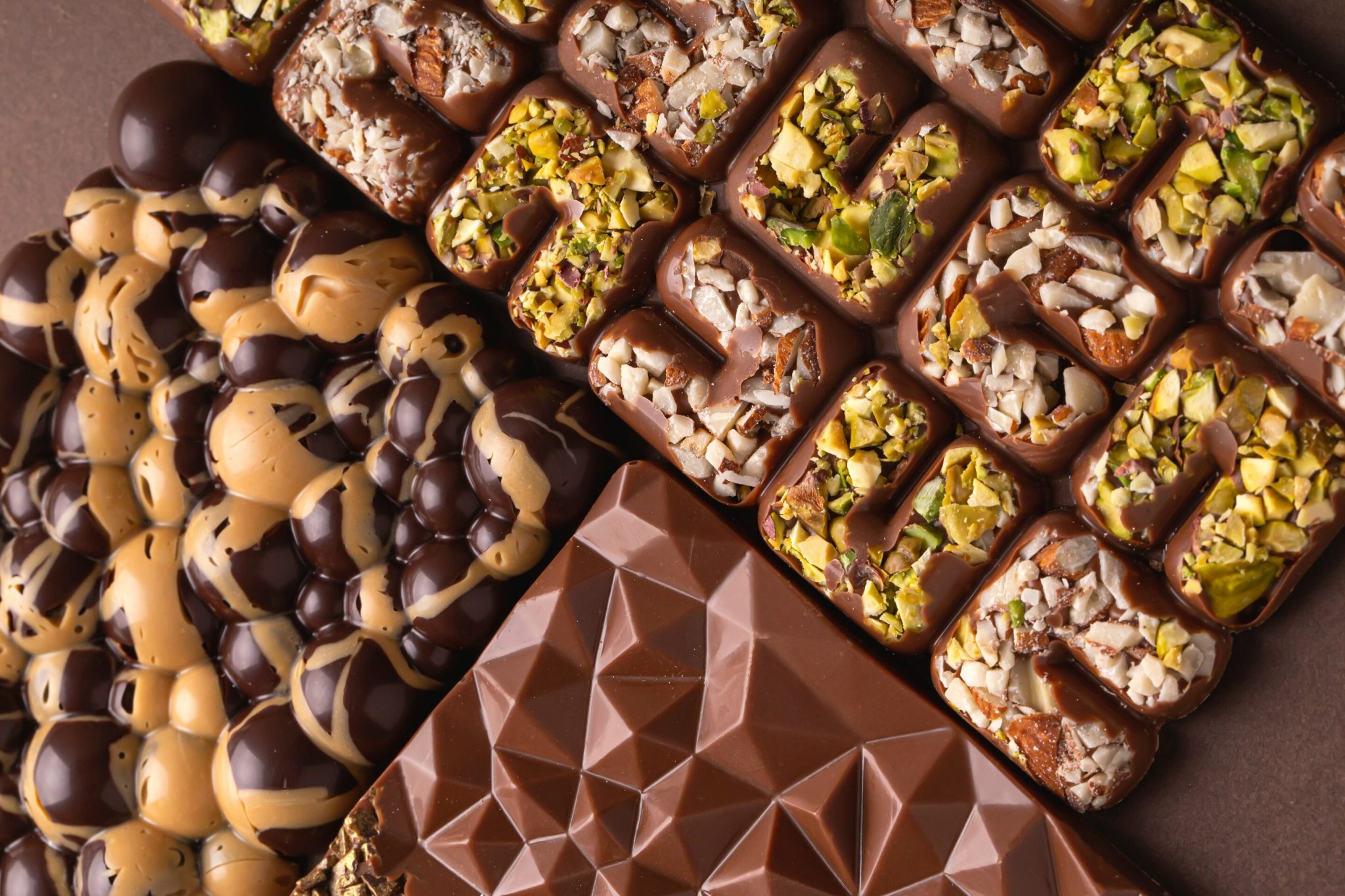
In older snack bars, chocolate was often used in simple ways: coated, drizzled, or added as chips. Today, texture matters more.Mondelēz’s 2024 State of Snacking report found that 81% of global consumers pay attention to the sensory experience of snacks.4 Barry Callebaut’s 2026 chocolate trends report found that 44% of consumers are highly drawn to unexpected textures, rising to 52% among Gen Z and millennials.5
This changes how chocolate should be used in snack bars because consumers want satisfying bars, not functional products that feel boring. Texture is not decoration. It can be the difference between a first purchase and repeat purchase.
Chocolate is Moving From Sweet to Multi-Sensory
Chocolate is also evolving beyond sweetness. Barry Callebaut reported that 42% of consumers find chocolates blending sweet and savory flavors very relevant.5
That matters because snack bars are naturally built from ingredients that can move across taste categories: nuts, seeds, grains, fruit, spices, salt, protein crisps, and coatings. These combinations work because they give chocolate more dimension. Sweetness is still there, but it is supported by bitterness, salt, acidity, heat, crunch, and aroma.
Global Flavors Are Redefining Chocolate Bars
One of the biggest changes is the influence of global flavors. Barry Callebaut’s 2026 report described “New World Chocolate” as a key trend, noting that younger consumers are seeking adventurous products and that Gen Z and millennials are looking for Asian ingredients such as matcha, calamansi, and yuzu.5 The same report found that 57% of consumers say their food and drink habits changed in the past year, rising to 71% for Gen Z and 65% for millennials.5
For snack bars, this creates room for chocolate formats inspired by:
• Japan: matcha, yuzu, black sesame, miso
• Korea: sweet-savory profiles, injeolmi-style roasted grain notes
• Mexico: cinnamon, chili, vanilla, dulce de leche, churro
• Middle East: pistachio, tahini, dates, cardamom, rose
• Southeast Asia: pandan, coconut, mango, tamarind
• Latin America: coffee, cacao nibs, chili, tropical fruits
The strongest ideas will not simply add a trendy ingredient to chocolate. They will connect flavor, texture, and usage moment, while also building emotional impact.
Chocolate is Also Becoming Cleaner and More Purposeful
Consumers are not only asking what a chocolate snack tastes like. They want to know what is in it. Barry Callebaut reported that 75% of consumers actively try to avoid processed foods, and 83% look for shorter ingredient lists when buying chocolate confectionery.5 Cargill also identifies indulgent, premium, healthy, sustainable, and clean as major themes shaping cocoa and chocolate innovation.6
Cargill found that “made with real chocolate” was the most sought claim across categories, with 84% of shoppers saying they were extremely or very likely to consider it in purchase decisions. 2
For snack bars, this means chocolate choices affect more than taste. They affect the label, claims, positioning, cost, and trust. This is especially important for private label. If a retailer wants its snack bar range to feel trustworthy and premium, chocolate quality is one of the first things consumers will notice.
Portion Size Is Changing Chocolate Snack Bars
Chocolate snack bars also need to respond to portion control.
Barry Callebaut reported that portion size is becoming a strategic lever in confectionery, with 38% of global consumers saying portion size is very relevant and another 44% finding it somewhat relevant.5 Mondelēz also found that 69% of global consumers look for portion-controlled snacks.7
This insight can be useful because smaller formats can support checkout, convenience, multipacks, lunchboxes, and sampling. For manufacturers, they create new production and packaging questions. For brands, they make indulgence feel more manageable.
Chocolate is Still the Anchor, But it Has to Do More
Chocolate remains one of the most powerful ways to make a snack bar desirable. But the category is changing.
Classic chocolate flavors still drive trust and familiarity. Dark chocolate supports adult, premium, and better-for you positioning. Global flavors make chocolate feel new. Texture makes bars more memorable. Cleaner labels and portion control make indulgence feel more intentional.
For retailers, manufacturers, brands, and suppliers, the opportunity is not simply to add chocolate. It is to decide what role chocolate should play. Is it there for comfort? Premium quality? Energy? Texture? Global flavor? A healthier indulgence? A better private label experience? The strongest snack bars will answer that question clearly. They will use chocolate with purpose, not habit.
References:
1. Eastlake, D. (2025). The future of chocolate: An era of bold innovation and ultra indulgence. Food Navigator. 2. Cargill. (2021). Cargill survey reveals nearly all Americans indulge in a daily chocolate treat. 3. Cargill. (2024). Cargill presents trends-inspired, innovative gourmet chocolate solutions at Food Hotel Asia 2024.
4. Mondelēz International. (2024). State of Snacking.
5. Barry Callebaut. (2026). Top Chocolate Confectionery Trends 2026 & Beyond.
6. Cargill. (2026). Cargill Cocoa & Chocolate’s Trend Report.
7. Mondelēz International. (2025). Mondelēz International State of Snacking Survey: Global Consumers Prioritize Portions and Snacking Mindfully.