Flavor is not only taste. It is memory, ritual, and identity.
That matters because snack bars are no longer limited to chocolate, peanut butter, berry, caramel, or coconut. They are becoming small, portable expressions of culture: a childhood dessert, a regional ingredient, a travel memory, a tea ritual, a school snack, or a familiar treat reimagined in a more convenient format.
For snack bar brands, retailers, and manufacturers, this creates a bigger opportunity than simply launching “new flavors.” Consumers are looking for products that feel interesting, familiar enough to try, and different enough to remember. Mondelēz International’s 2024 State of Snacking report found that 91% of global consumers snack at least once a day, and 75% say they get excited about finding a new snack to try.1
Case Study : KitKat Japan and the psychology Of Good Luck
One of the clearest examples of culture-led flavor strategy is KitKat Japan.
In Japan, KitKat became more than a chocolate wafer. It became a good-luck charm, a gift, a collectible, a regional souvenir, and a seasonal product. The cultural trigger was partly linguistic: “KitKat” sounded close to “kitto katsu,” often translated as “you will surely win,” which Japanese students and families connected to entrance exams.2
What makes the example powerful is that the meaning was not invented from nothing. The association began organically among students and families, and Nestlé later amplified it with exam-season packaging and encouragement messages. 2
The idea then became even more ritualistic through “KitKat Mail,” a Japan Post partnership that allowed people to write messages on special KitKat packages and mail them as edible good-luck postcards to students.3 WARC reported that the campaign sold through 20,000 post offices, generated $11 million in free PR, created a new retail model, and won the Media Grand Prix at Cannes Lions.3
Then came the flavor layer.
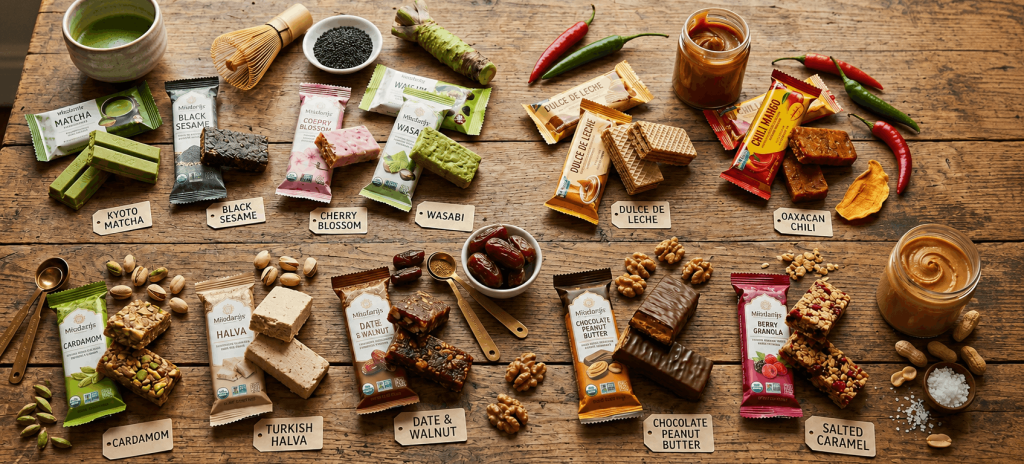
KitKat Japan used regional and seasonal flavors to connect with omiyage, the Japanese custom of bringing gifts back from travel. Examples include Kyoto matcha, Hokkaido melon, Okinawan purple sweet potato, Shizuoka wasabi, Shinshu apple, sake, hojicha, cherry blossom, and other limited editions.4
The lesson is not that every brand should copy KitKat Japan. The lesson is that culture can change what a snack is for. In the case of KitKat, it became a simbol for encouragement, gifting, travel, collection, seasonality, and place identity.
Flavor as Memory
A culturally inspired snack bar should not taste like a trend report. It should taste like something someone already half-remembers. Flavor is emotional because people connect it to childhood, family kitchens, school snacks, holidays, street food, local bakeries, travel, and routines. A flavor can remind someone of a dessert they grew up with, a drink they used to buy after school, a festival food, or a snack their family packed for a trip.
This is why nostalgia can be so powerful in snack bar development. It makes trial feel safer. The product may be new, but the emotional signal feels familiar.
For example, churro, dulce de leche, halva, black sesame, matcha, cardamom, mango chili, or apple cinnamon are not just flavor combinations. In the right market and format, they can carry associations with warmth, comfort, celebration, travel, or home.
Brands should ask:
• What memory does this flavor activate?
• Is it a childhood flavor, a holiday flavor, a regional flavor, or a daily ritual?
• Does the texture support that memory?
• Does the packaging tell the story clearly without overexplaining it?
A flavor can travel globally, but it has to land locally
Flavor as Ritual
Culture also shapes when people eat. This is where snack bar brands can learn the most from KitKat Japan. The product became attached to exam season, encouragement, gifting, travel, and regional souvenirs.2,3 Snack bars have the same opportunity because they already fit into everyday routines.
They can belong in:
• Exams and study periods
• Travel bags
• Work breaks
• Lunchboxes
• Hiking and outdoor rituals
• Fitness routines
Festivals and seasonal moments
• Gifting occasions
• Morning commutes
• Afternoon energy dips
A bar designed for a school lunchbox should not necessarily taste like a bar designed for a post-workout moment. A bar for travel may need to feel satisfying, durable, and easy to share. A bar for office snacking may need a cleaner finish, less mess, and a more adult flavor profile. A bar for a festival or seasonal launch can be more playful and limited edition. The eating moment should shape the flavor brief.
Instead of starting with “What flavor is trending?” brands should ask:
• Who is eating this?
• Where are they eating it?
• Is it a reward, a routine, a gift, or fuel?
• Should it feel nostalgic, energizing, premium, playful, or comforting?
• What level of novelty will feel exciting without becoming confusing?
Consumers do not only ask, “Does this taste good?” They also ask, often without realizing it, “Do I know what this is?”
Culture Changes Taste, Texture, and Acceptance
Cultural flavor strategy is not only about storytelling. It also affects product acceptance.
A study involving children from Lebanon, Egypt, Portugal, Italy, and Spain found significant differences among countries in snack preferences and food-related attitudes.In the granola bar results, Portuguese, Spanish, Lebanese, and Egyptian children reported broadly similar liking scores for the tested snacks, while Italian childrenshowed lower liking scores for all samples, which researchers linked to higher food neophobia. That matters for brands launching snack bars across markets. A flavor that feels exciting in one country may feel unfamiliar or too risky in another.
Texture is just as important. A snack bar study in Surabaya found that respondents preferred snack bars with sweet taste, sticky texture, cereal-based composition, single-pack packaging, and a 25 g weight.6 The same study rankedtexture as the most important attribute, followed by composition and flavor. 6
This is a practical reminder for product teams. A flavor concept can be strong on paper and still fail if the bar is too dry, too dense, too sticky, too bitter, too sweet, or too unfamiliar in texture.Taste creates attention but texture often decides whether people come back.
The future of SNack Bar Flavors is Cultural, Not Just FIctional
The Future of Snack Bar Flavors Is Cultural, Not Just Functional
Snack bars will continue to compete on protein, fiber, low sugar, convenience, clean label, and functional benefits. But those benefits only matter if the bar tastes right for the person eating it and culture helps explain what “right” means.
It shapes which flavors feel familiar, which textures feel satisfying, which ingredients feel authentic, and which eating moments make sense. It also helps brands move beyond generic flavor launches and build products with stronger stories.
The strongest snack bars do not simply borrow flavors. They borrow meaning respectfully. They understand that the format may be international, but the bite has to feel familiar.
References:
1. Mondelēz International (2024). State of Snacking.
2. Levitt, A. (2021). How Kit Kats Became A Japanese Phenomenon. The Takeout.
3. WARC. (2009). Nestlé takes Media honours at Cannes.
4. Demetriou, D. (2015). How the KitKat became a phenomenon in Japan.
Telegraph.co.uk. 5. Romeo-Arroyo, E., Mora, M., Urkiaga, O., Pazos, N., El-Gyar, N., Gaspar, R., Pistolese, S., Beaino, A., Grosso, G., Busó, P., Pons, J., & Vázquez-Araújo, L. (2025). Co-Creating Snacks: A Cross-Cultural Study with Mediterranean Children Within the DELICIOUS Project. Foods, 14(2), 159. https://doi.org/10.3390/foods14020159 6. Herdianto, F. W., Yulistiani, R., & Sarofa, U. (2025). Consumer Preference Analysis of Snack Bar Product Attributes in Surabaya Using Conjoint Analysis Method. Asian Journal of Applied Research for Community Development and Empowerment. 9(1), 182–187. https://doi.org/10.29165/ajarcde.v9i1.604 7. Hyslop, G. (2025). Buckle up, flavour trends in 2025 are taking a wild ride. Bakery&Snacks